
How to Measure Portafilter Size
Already measured? Our bottomless portafilter comes in the four fits this guide leads to: 54 mm, 51 mm with three or two lugs, and 58 mm.
· Dana Whitlock
Measuring is the fallback when your machine model is not listed anywhere. It works, as long as you measure the right thing and know what it leaves out.
Three places, three numbers
Put a ruler on a portafilter and you can get at least three different measurements, all of them honest and only one of them useful for buying.
The inside of the portafilter head is wider than the basket, because the basket has to drop into it. Measure here and you will read a millimeter or two over.
The group head on the machine is wider again, because the portafilter rim has to seat against it. Measure here and you will read several millimeters over.
The outside diameter of the basket rim is the one that matters. It is what the "51 mm", "54 mm" or "58 mm" in a product name refers to, and it is the number that decides whether a basket will drop into a given portafilter.
This is also why the same part is sold as 53 mm, 53.3 mm and 54 mm. Different sellers measured different things, or measured the same thing to different precision. All three describe the same fitting.
The measurement, step by step
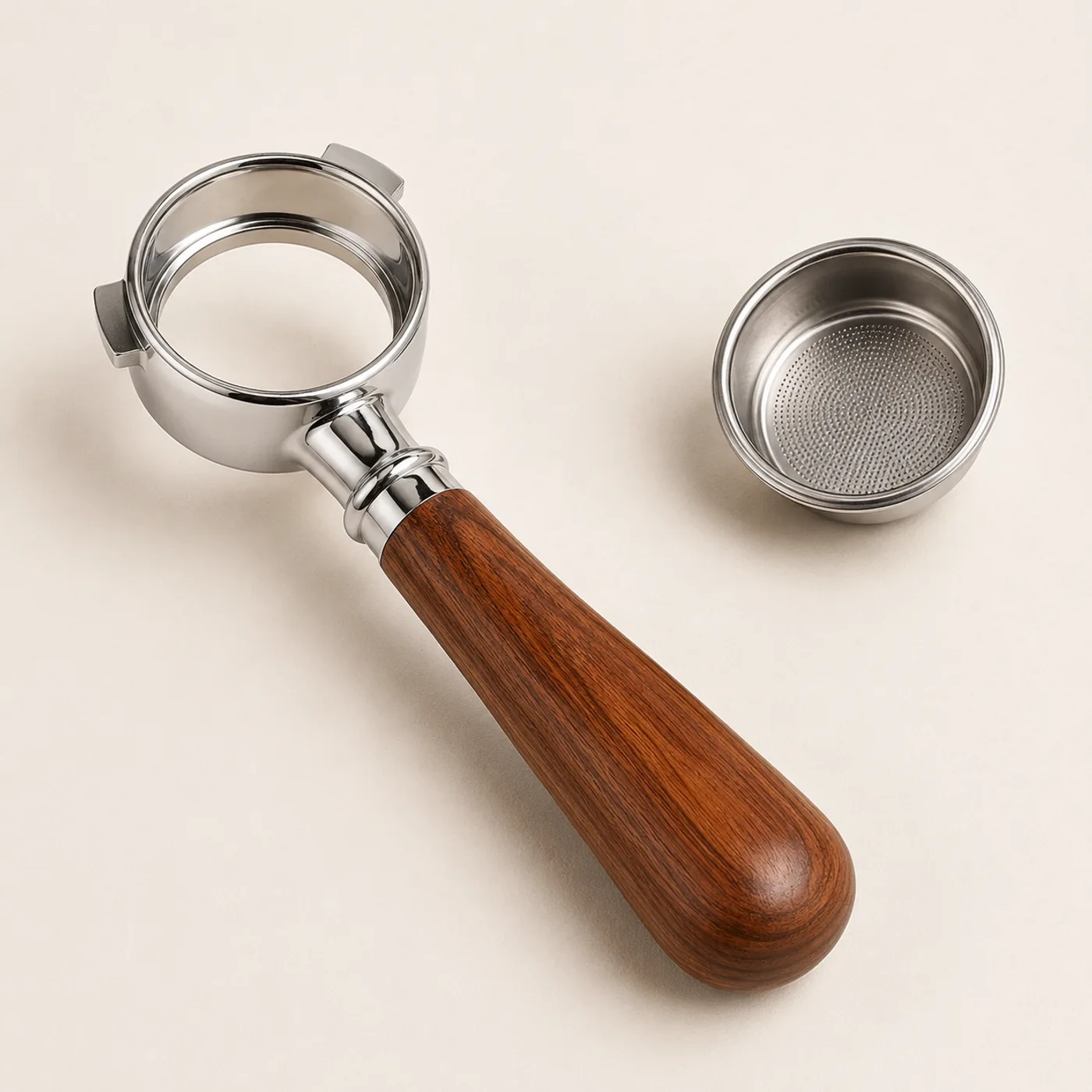
Take the basket out. It should lift straight out. If it is stuck, it is fines compacted under the rim rather than a design feature; work it loose gently.
Measure across the widest point of the rim. A caliper is ideal. A steel ruler is fine, as long as you measure across the true diameter rather than a chord — line the ruler up so it passes through the center.
Round to the nearest of 51, 54 and 58. If you read 53.4, that is a 54 mm fitting. If you read 50.7, that is 51 mm. There is no 52 mm or 56 mm portafilter standard to fall between.
Then stop measuring and start counting.
Counting lugs, which the ruler cannot do
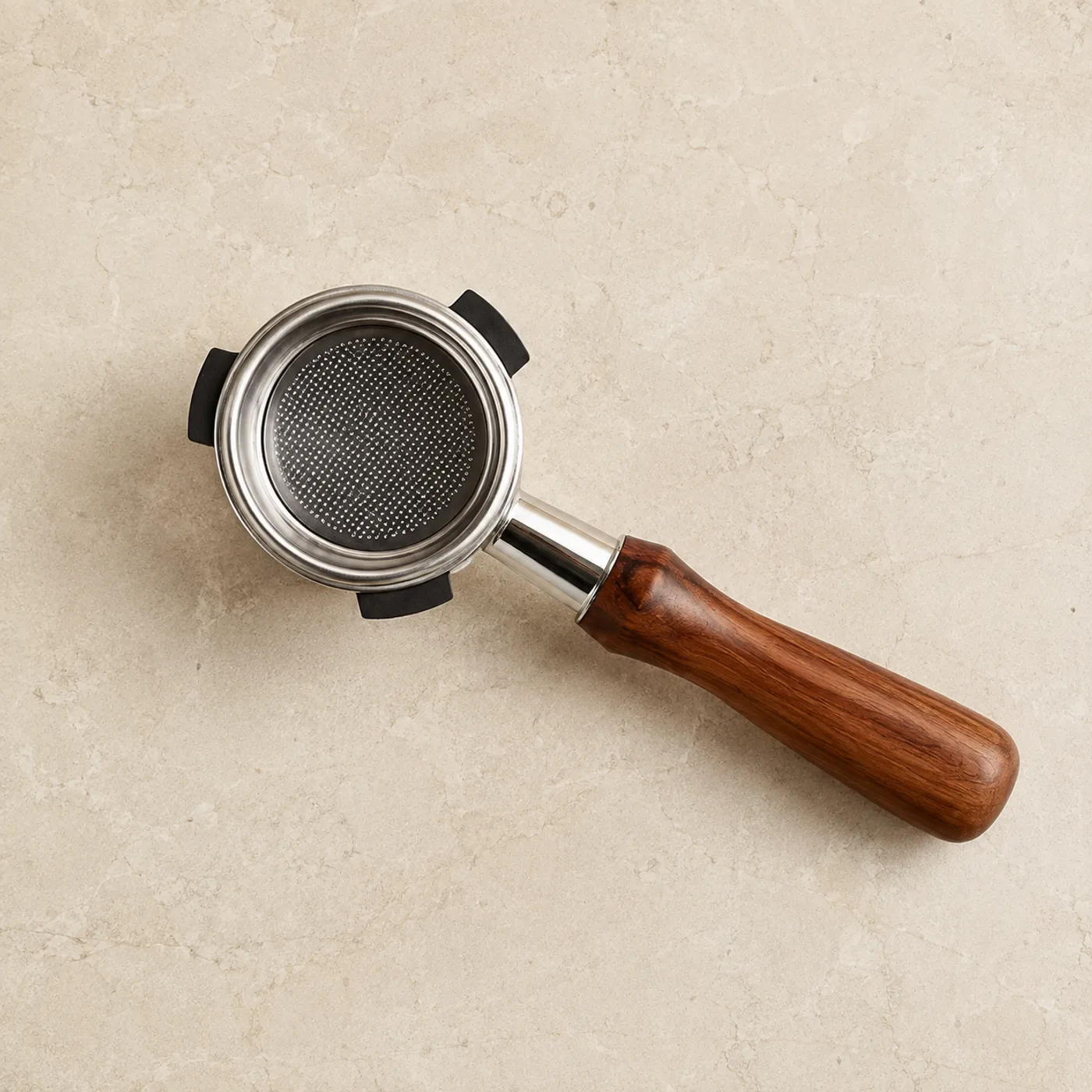
Turn the portafilter upside down and look at the outer rim. The tabs sticking out are the lugs, and they are what slide into the group head and hold the portafilter against nine bars of pressure. Count them.
Three lugs means one wide tab and two narrower ones, spaced unevenly so the portafilter can only enter one way round. This is the Breville and Sage arrangement at 54 mm and the DeLonghi Dedica arrangement at 51 mm.
Two lugs means two tabs opposite each other. This is the DeLonghi Stilosa arrangement at 51 mm, and it is also the classic arrangement on many larger 58 mm machines.
Diameter and lug count together are the specification. Either alone is half an answer, and the half most often missing is the lug count — which is exactly why someone can measure a 51 mm basket, order a 51 mm portafilter, and receive something that will not lock into their machine.
What measurement cannot tell you
Two more things vary between machine families, and no ruler will find them.
Group depth. How far the portafilter sits into the head. Two machines can share diameter and lug count and still seat differently, which shows up as a handle that locks much further round than expected. Usually livable, occasionally not.
Seating angle. The angle at which the rim meets the gasket. A mismatch here shows as seepage around the outside edge under pressure, which on a bottomless portafilter looks disconcertingly like a puck problem.
This is why looking your model up beats measuring whenever the model is known. Measurement is a good fallback, not a better method.
Ruler, caliper, or the credit card trick
A digital caliper is the right tool and the cheapest ones are perfectly adequate for this. Set it across the widest point of the basket rim, close it until it just touches, and read. It removes the two errors a ruler invites: measuring off-center, and guessing at the fraction.
A steel ruler works if you are careful about one thing. The line you measure has to pass through the center of the circle, not near it. A ruler laid slightly off center measures a chord rather than a diameter and always reads short — which is how someone with a 54 mm basket convinces themselves they have a 51 mm one.
No measuring tool at all? A standard bank card is 85.6 mm long, and that is a useful reference. A 51 mm basket is a little under two-thirds of the card; a 58 mm one is a little over two-thirds. It will not distinguish 53 from 54, but nothing needs to — those are the same fitting. It will comfortably tell 51 from 58, which is the distinction that matters.
Measuring the group head, and when it is useful
The group head diameter is not what you order a portafilter by, but it is worth knowing for one purpose: gaskets. Group gaskets are sold by machine and by size, and a gasket that has hardened with age is a common cause of a portafilter that seems to leak or that locks much further round than it used to.
If your portafilter fitted well and has gradually started needing more travel to lock, the gasket has compressed rather than the portafilter having changed. That is a five-minute replacement and it is not a sizing problem.
A quick sanity check before ordering
| You measured | You counted | Likely family |
|---|---|---|
| ~51 mm | 3 lugs | DeLonghi Dedica, SMEG, Severin, Casabrews |
| ~51 mm | 2 lugs | DeLonghi Stilosa and combination machines |
| ~54 mm | 3 lugs | Breville / Sage Barista family, Solis |
| ~58 mm | 2 or 3 lugs | Larger machines — check the model, not the number |
58 mm is the row where measurement helps least, because it is the diameter shared by the widest range of otherwise unrelated machines. If you land there, the model number is worth finding.
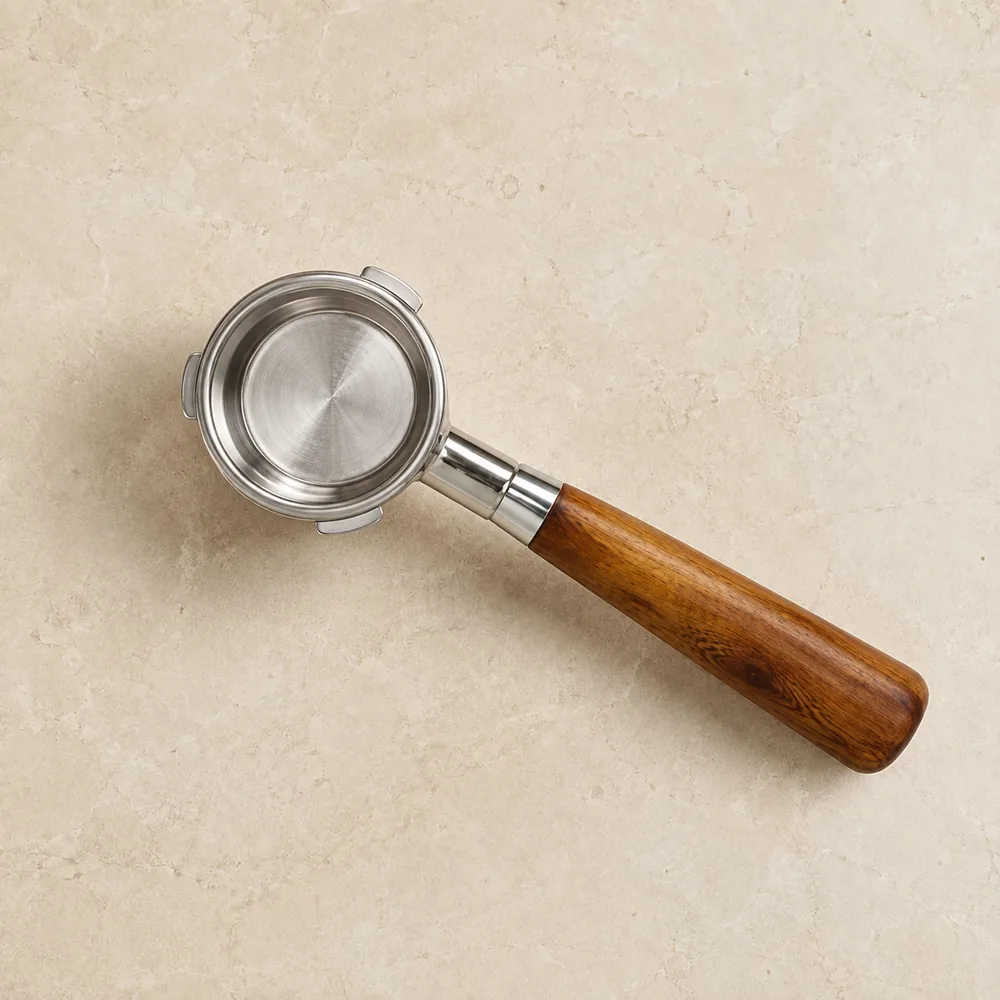
Found your row? Our portafilter comes in these same four fits, and the fit selector at the top of this page lists the machines each one locks into. It calls the lugs “ears”: a 51 mm with three lugs is the “51 mm — 3 ears” fit. On 58 mm, find your model in that list before you order.
Where to go next
The portafilter size guide lists fits by machine model, which is faster than measuring when your model is known. If you have the size sorted and the shots are spraying, that is a different problem.

Dana Whitlock · Espresso guides editor
Writes the Puckwell guides to bottomless portafilters: machine fit, puck preparation and reading a shot while it runs.